Author: Tim Shaker

  • CST 338: Week 7/8

    Looking back on the HW1 assignment, I would probably approach this assignment in a similar way. Now that I have a better understanding of the game’s mechanics, however, I would implement some things differently. Although it wasn’t part of the assignment, creating a game with a Java Swing UI would be a fun challenge. Hangman is a visual game with simple graphical components, so it shouldn’t be too difficult to make a UI for it.

    The thing I enjoyed most about this course was learning Kotlin. It’s a modern, expressive, multi-paradigm programming language, which allows for more flexibility than Java. Kotlin supports most Java language features, with a few exceptions, making it possible to follow both object-oriented and functional programming paradigms when designing an application.

    I also learned a lot about Android development. Learning how to use Jetpack Compose has been pretty intuitive for me, since I’m already familiar with React. Before this course, I hadn’t done much native programming for mobile devices, having mostly focused on web development, so it was great to learn more about this area of software development. Maybe I’ll learn Swift next, since I have an iPhone, or spend some more time learning React Native to target Android and iOS.

    Overall, this course has been helpful for learning more about software development and design patterns. There are a ton of resources for learning more, like Node.js Design Patterns and Patterns.dev. I’ll make sure to spend some more time continuing to learn about this topic.

  • CST 338: Week 5

    I reviewed Glenn’s code for the Markov assignment. Glenn’s strategy was to first implement methods that didn’t call any other methods, then implement the methods that called those methods, which makes sense, since you can make sure the methods without any dependencies work before implementing the methods that call other methods.

    My strategy was to first scaffold out the code according to the documentation, so that everything was syntactically correct. From there, I implemented the logic as it was described in the documentation, focusing on getting the tests to pass. After that, I reviewed the documentation again and checked the output to make sure it made sense.

    I think both of our strategies are reasonable for this assignment. Glenn’s code follows the Google Java Style Guide, and so does my code.

    I also worked on developing an Android app this week using Kotlin, which is Google’s recommended language for Android development, and I’ve been liking it so far. I’m finding Kotlin to be more expressive than Java, similar to TypeScript, which is my go-to programming language. Kotlin also works with Java, so both languages can work together in the same project.

    Kotlin appears to be gaining more traction in recent years, so it could be a good language to learn.

  • CST 338: Week 4

    Project 1 Code Review

    I reviewed code from Glenn and Jack for Project 1. One of the first things I noticed from reviewing my teammates’ code was that I overlooked implementing a method in my own code. All of the tests passed on my code, and it seemed like everything was working correctly, but I guess that one slipped by me. It’s helpful to work with a team for this reason, since one person will often see what another person might miss. Other than that, we all completed the assignment and wrote code in a clear and understandable way.

    Another thing I did differently was to handle the resistance between between ElementalTypes with a matrix, since the values were given as a table, so a matrix made sense. I also simplified the constructor and setPhrase function a bit to avoid leaking this out of the constructor.

    My general strategy for approaching this assignment was to first read the documentation, then scaffold out out the classes and resolve any syntax errors so that the code would compile. From there, I worked on implementing the logic as it was described in the documentation, focusing on getting the tests to pass. After all the tests were passing, I reviewed the output from the tests to make sure it made sense, then cleaned up the code a bit and added some javadocs.

    My teammates described their strategies as follows:

    I just did what make sense to me at the moment and skip that I don’t get quickly. If I ran into a method that uses another method, I stop and try to do the other method first. Basically I’m solving methods that doesn’t need other method because it makes more sense to me workflow wise. I also try to debug and step into code anytime I can. That all I can think of.

    – Glenn

    When solving this assignment, I tried my best to follow the documentation and understand why certain tests didn’t pass. I would try different approaches until I figured out what worked and didn’t work.

    – Jack

    I think my strategy worked for the most part, but in the future, I’ll make sure to review the documentation again, even after the tests are passing, to catch anything that may have been overlooked. I used an automated Google Java Style Guide formatter, and my teammates’ code also appears to follow the Google Java Style Guide.

    The most challenging part of this project was probably understanding and implementing the Monster battle mechanics, but it was also the most interesting. It might help to create a state diagram to explain how everything should work together.

    Overall, I’m proud of completing this project by implementing code that is clear and concise, while learning more about object-oriented software design in the process. I didn’t do anything to celebrate for this project, but I will be sure to celebrate after the next project, especially since it’s the final project before the holiday break. Maybe I’ll buy a new bike for Christmas, or use the time to work on some personal projects.

  • CST 338: Week 3

    Code Review

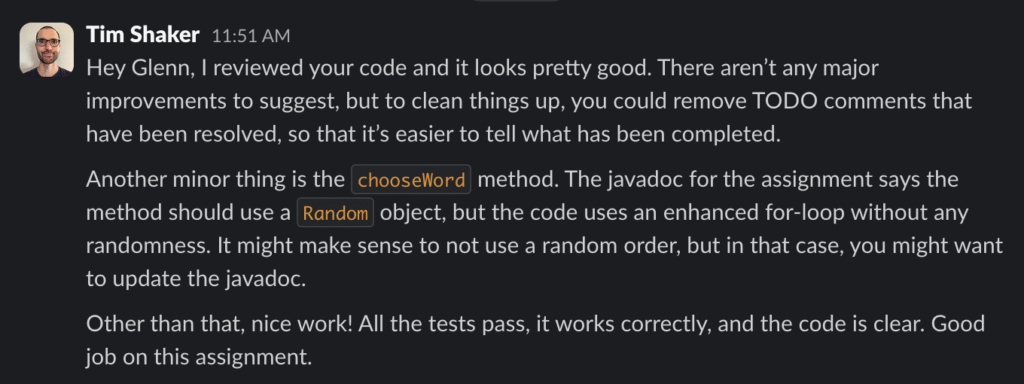
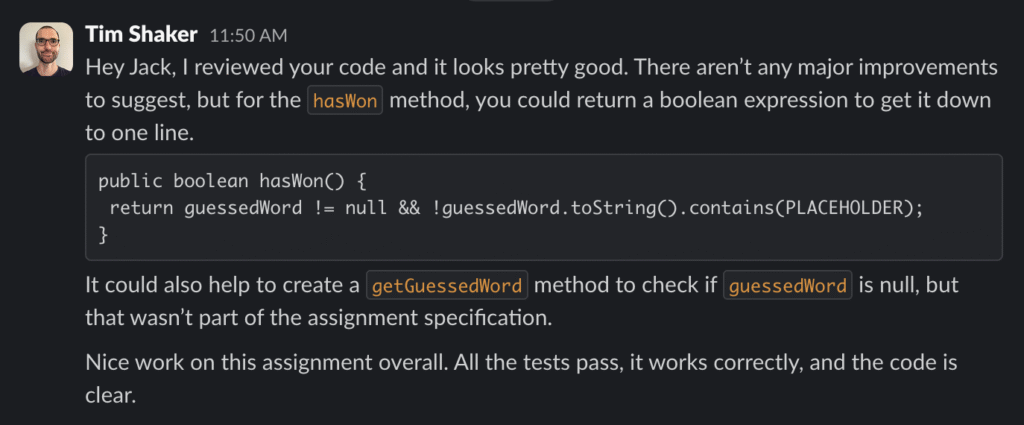
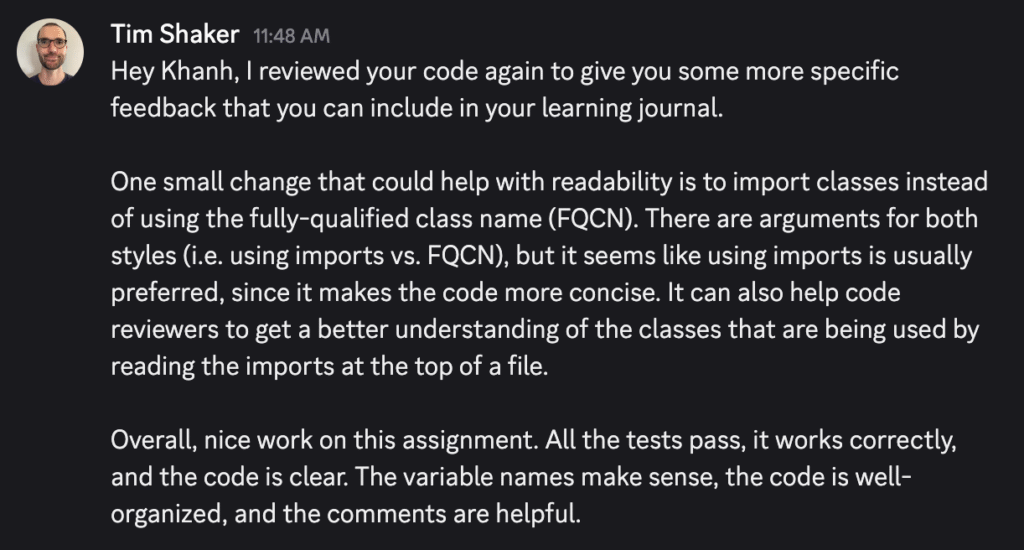
    I reviewed code from Khanh, Glenn, and Jack for the Hangman assignment. There weren’t many major improvements to be made. The assignment was fairly straightforward, so we all followed the instructions and produced similar code. Here are the reviews I shared with my classmates:

    Here are some positive trends I noticed about the code I reviewed:

    1. All of the tests passed, and the game worked correctly with each student’s code.
    2. Adding a conditional to check if a variable is null or a List is empty. It’s important to do this to prevent runtime errors.
    3. Using a do-while loop in the chooseWord method. This makes sense because the loop may or may not need to repeat, depending on if the randomly selected word has been guessed already.

    There is always room for some improvement though. Here are a couple things I noticed that could be improved:

    1. Throwing an error with more specific messages, to help debugging.
    2. Making sure to remove TODO comments once they are resolved.
    3. Using imports instead of fully-qualified class names (FQCNs).

    The reviews I received from my classmates were generally positive. One reviewer mentioned that I could improve my code’s comments by including them throughout the code instead of just using javadoc comments. I agree that it can often be helpful to have comments in code to explain specific parts.

    Takeaways

    I think the hardest part of this assignment was just wrapping my head around the documentation and how the code is supposed to function. The biggest victory from the assignment for me was developing the practical skill of onboarding to a new codebase. Onboarding to an unfamiliar codebase can often be a challenge, but once you get the hang of it, you can develop strategies to make it easier.

    For example, one thing I’ll do is to make sure the code is syntactically correct before implementing any logic. Fixing the syntax errors will usually allow the code to compile, which is always a step in the right direction. From there, it’s a lot easier to focus on getting the tests to pass and following the assignment’s instructions on how to implement the code.

    One thing that could help make the code more testable is to have the Hangman class handle its own input, instead of having a separate GameLoader class handle input. Being able to test the entire game end-to-end within a single class would make it easier to verify the complete functionality of the game, so that any issues would be isolated to a single class.

  • CST 338: Week 2

    This week, we worked on a few Java projects to better understand OOP concepts. The four pillars of object-oriented programming (OOP) are abstraction, encapsulation, inheritance, and polymorphism, which help to keep code modular, reusable, secure, and maintainable, among other benefits.

    1. Abstraction describes the process of hiding complex implementation details and exposing only the necessary features of an object. For example, we designed a Shape interface that exposes an abstract getArea function to be implemented by concrete classes.
    2. Encapsulation allows an object to control and restrict access to its own internal state. For example, we developed a simple Hangman game, which used private fields to keep track of the state of the game, like the secretWord that the user tries to guess.
    3. Inheritance is the process whereby a subclass can acquire properties and methods from a superclass. For example, we worked on a Pokémon-style game, where different types of subclasses inherit properties from a Monster superclass.
    4. Polymorphism means “many forms” and describes how a common interface can behave differently depending on the object to which it is being applied. For example, the different Monster subclasses have common methods that behave differently, depending on which kind of Monster is being used.

    We also practiced some software development techniques this week, like test-driven development (TDD) and version control with Git. We used TDD to implement our Java projects according to tests and specifications included with the assignment, in addition to writing our own tests with JUnit. To keep track of changes we made to our repositories, we used the GitHub flow, which involves working on a new feature branch created from the main branch, opening a pull request to merge changes, and then merging the new changes back into the main branch.

  • CST 338: Week 1

    This week for our Software Design class, we got our Java development environments set up and worked on some coding exercises using CodingBat.

    We started with some straightforward code challenges and then moved on to more difficult ones. I’ve taken a Java course before and have used Java to solve LeetCode problems, so some of these problems were familiar. The hardest part was probably remembering Java syntax and methods, since it’s been awhile since I’ve used the language.

    To solve the problems, the first thing I would do is get the code to compile by returning the correct type. For example, if the function is supposed to return a String, I would just have it return an empty String. On CodingBat, this displays all the test cases, which helps with getting an idea of how to solve the problem and figuring out which edge cases to consider.

    For simpler problems, I would just start coding out the solution, but for more complex problems, it’s helpful to follow a structured approach. George Pólya’s How to Solve It presents a helpful problem solving framework that can be remembered as UPER:

    1. Understand the problem
    2. Plan a solution
    3. Execute the solution
    4. Review and revise

    I was able to solve many of the easier problems on the first try, while harder problems took a bit more effort. I set up a Java development environment on my local machine to debug and step through harder problems, which made it easier to see what the issue was.

  • CST 349: Week 8 Learning Journal

    Reviewing Final Video Projects

    This week, we reviewed other teams’ final video projects. Each team made two videos: a short video for a general audience, and a longer video designed for technical professionals.

    SB53 – California AI Safety Bill

    short video / long video

    This team did a great job of introducing this legislation to people who might not be familiar with it. Both presentations were pretty clear and covered the main points of the presentation well. The research and video production were also done well, and they did a great job of making the topic interesting and understandable. One small change I might suggest is to make sure that the speaker’s video doesn’t block the text on slides.

    It seems like they coordinated their work pretty well, in terms of who would cover which parts of the presentation. Each speaker had their own presentation style for the longer presentation, which was reasonable, like a conference, while the shorter presentation had a more consistent style. Both videos were appropriate for their intended audience.

    It was interesting to learn more about this legislation, and I look forward to hearing more about how it is implemented, especially the CalCompute data centers.

    Trend of DeepFake/AI Content Generation

    short video / long video

    This team delivered a timely introduction to a topic that is becoming more concerning, as AI-content generation tools become more sophisticated. The topic was presented appropriately for its intended audience, although the short video and long video felt pretty similar, with the same background music and template. I would recommend not including background music for the longer presentation, since it was a little distracting.

    The video production could use a little work. The material was interesting, and it seems like they did their research on the topic, but some production issues made it difficult to follow.

    Drone Delivery Systems

    short video / long video

    This team understood the assignment. The short video was fun and engaging, while the longer video was more comprehensive and technical.

    The first video seemed to use a lot of AI-generated content. It felt like watching a commercial, which worked pretty well. The second video was more like a work presentation/product demo, and it seems like they did a good amount of research. Both videos were appropriate for their intended audiences.

    This team seemed to work pretty well together. Both videos felt cohesive and consistent.

    Weekly Summary

    Our team’s videos are available here: short video / long video

    We definitely learned a lot about LLMs in the short time we had to research and produce these videos. I’m grateful for this opportunity to learn more about LLMs, as they are becoming more and more integrated into our daily lives. It’s definitely helpful to know more about how these tools work, so that we can use them more effectively.

    I think our team learned a lot about communication and collaboration. We probably could have used more time to work on this, since everyone’s schedule is different. It might have helped to start the project earlier in the term, with a deadline for a rough cut before the final cut.

    As much as I appreciate asynchronous work, it probably would have helped to have more meetings. Asynchronous work is great for deep, focused work, but getting in alignment is often easier with meetings. We’ll work on staying in communication and meeting more aggressive deadlines on future projects.
  • CST 349: Week 7 Learning Journal

    Research Video Collaboration

    Our team used a few different tools to collaborate and produce our final research video project on how LLMs work. For planning, communication, and collaboration, we used Slack with a Canvas page to keep track of project details and learning resources.

    To get an idea of how to approach the project, we used ChatGPT to generate an initial script for a video on the topic. From that script, we split up the video into sections and assigned sections to individual team members. From there, we edited and iterated on the script, focusing on our individual sections and contributing our own understanding of the topic.

    To produce the actual videos, we used two tools: Google Vids and Adobe Express. The assignment involved making two separate videos: one for a professional/academic audience and one for a more general audience, so that it could be understood by a kid. We found that Google Vids was better for making the longer professional presentation, and Adobe Express was better for making short-form content.

    The process was relatively smooth, though there were some bumps in the road. For example, we initially planned on using Google Slides and recording our presentation with Zoom, but then we found Google Vids, which turned out to be a better tool for the job. Google Vids has a feature to import Google Slides though, so it worked out pretty well.

    Weekly Summary

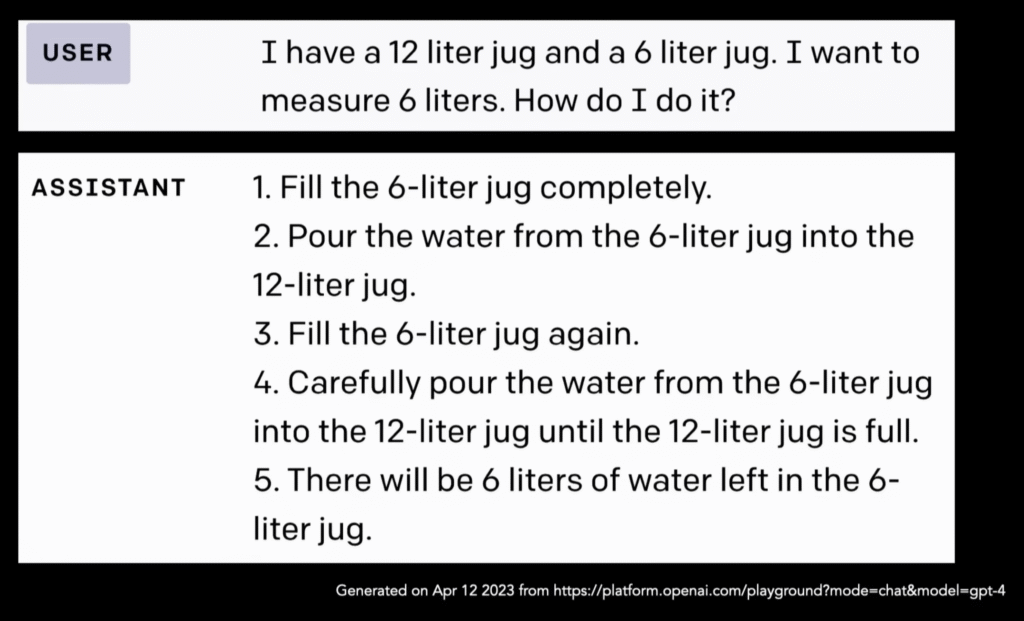
    This week involved reviewing and reflecting on a TED talk of our choice. I found a talk by Yejin Choi called Why AI Is Incredibly Smart and Shockingly Stupid. In the talk, Choi explains how AI can sometimes fail at tasks that humans can easily accomplish. For example, when asking a question with a straightforward answer, GPT-4 gives a convoluted and incorrect response:

    The solution to these kinds of problems, Choi argues, is to teach AI to learn through a process called Symbolic Knowledge Distillation. In this process, a larger model “teaches” a smaller model, which results in a discrete, human-readable knowledge graph with corresponding neural weights. The resulting model is more efficient and understands commonsense reasoning better than its teacher model.

    The promise and peril of AI podcast from Harvard raised some interesting questions about ethics and AI. The discussion brought attention to the uncertainty surrounding AI and its effects on society, despite the many benefits it presents, as well as the potential need for regulation. Embedding ethics into computer science education at Harvard was mentioned as a way to encourage ethical thinking in technologists. Another interesting point was the potential for AI to both level the playing field by empowering lower income workers to improve their skill-set, while at the same time amplifying existing inequalities by reducing the need for entry-level workers.

    This week also involved some lessons on presentation skills. Slides decks like PowerPoint can often be useful for presentations, but delivering an effective presentation requires more than just reading bullet points. Giving a good presentation communicates an idea effectively, which involves knowing your audience and making sure to explain things in a way that they will understand.

    Toastmasters offers some helpful advice on giving a technical briefing: know your audience, state the purpose of the presentation, organize the material in a logical fashion, and summarize the main points. I’ll make sure to keep this in mind as I develop my presentation skills.

  • Week 6 Learning Journal

    Developing Capstone Ideas

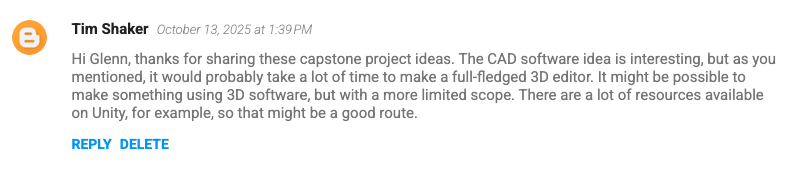
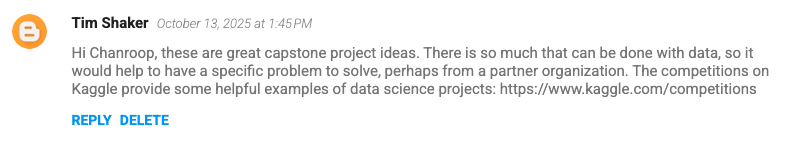
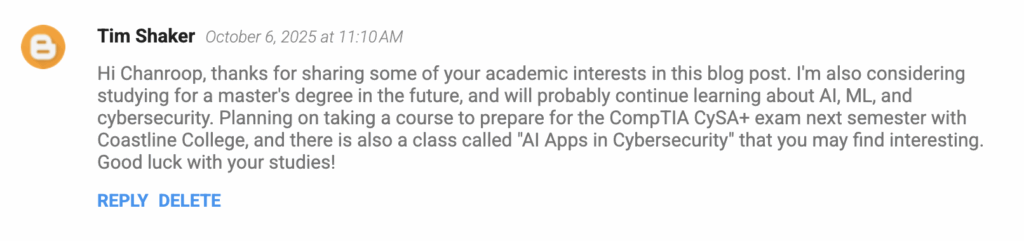
    This week, we worked on helping our teammates develop their capstone project ideas. Here are some comments I left on my teammates’ blogs:

    Weekly Summary

    This week’s lecture was about job searching, writing resumes, cover letters, technical interviews, and what companies are looking for in job candidates. This information should be helpful on the job search, and I’ll be sure to make use of the career resources that are available to me as a CSUMB student.

    I also spent some time learning about LLMs for our final video presentation. There is a ton of material out there on LLMs, and things get pretty technical pretty quickly, so I’m learning a lot. I found a helpful course called How LLMs Understand & Generate Human Language by Kate Harwood, who does a great job of introducing LLMs in a practical and understandable way.

    At our team meeting, we discussed the video project and how we plan to approach it. We split up the presentation into sections, with each team member focusing on a specific step of how LLMs process data and generate text.

    I also learned more about WordPress. One of the assignments this week was to put together our portfolio page, which we’ll add to as we progress through the CS Online program. I’m using the new WordPress Block Editor, which can be a little tricky, so this has been a great opportunity to get some practice with it. I figured out that it actually works pretty well with Tailwind CSS, since the block editor allows you to easily add classes to blocks, which can make styling easier.

  • Week 5 Learning Journal

    Blog Comments

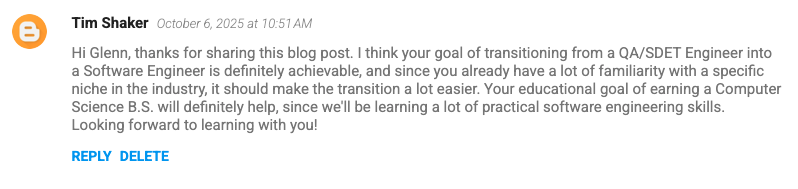
    Last week I blogged about my educational and career goals. This week, we compared our goals to our classmates’. Here are some comments I left on a couple of my team members’ blogs:

    Capstone Project Ideas

    After reviewing the capstone festival, here are a few ideas for potential capstone projects:

    1. Agentic AI is the next step in artificial intelligence. Instead of merely providing information like a chatbot, AI agents can actually complete tasks, which opens up a whole new world of possibilities. There are a few AI agent frameworks available that could be helpful with a project like this, for example, Google’s Agent Development Kit, Microsoft’s AutoGen, n8n, and the OpenAI Agents SDK. The adk-samples repo and the Open AI docs have a few examples of agentic AI projects. For a project like this to work, it would help to have a business problem that AI could help solve, perhaps from a partner organization.
    2. Cybersecurity should be a top priority for all organizations, and new tools like CodeQL can help automate the process of discovering and mitigating vulnerabilities. I’m interested in learning more about the Security Scan Summary Project with the US Naval Research Laboratory. The project mentioned that they generated PDF reports, but it may be useful to have a web dashboard for viewing these reports, which would be a great way to build on the previous capstone project.
    3. Large Language Models are becoming increasingly important in business, education, and everyday life. Pre-trained models like Llama allow anyone to run and fine-tune their own LLM, and LLMs can even run in web browsers now, for example, via WebLLM. I have an existing project called journaling.place that I could integrate an LLM into, which could be an interesting capstone project.

    Weekly Summary

    This week was mostly about planning for our capstone project and our careers after CS Online. I’m definitely interested in internship programs and perhaps graduate school. I’ll make sure to spend more time finding opportunities and researching programs as my time in CS Online progresses.

    For CST 300, we used AI to develop our stakeholder analysis for the ethics essay, which helped me to think about the issue in some ways I hadn’t already considered.

    I also spent some time learning about AI. The AI ecosystem is fairly mature at this point, so it’s a great time to dive in and learn from all of the resources available. It’s amazing that we can have AI teach us how it works, just by asking the right questions.